Conversion tracking: how to know which marketing actually makes you money
By John Kiama · 6 min read · Last updated
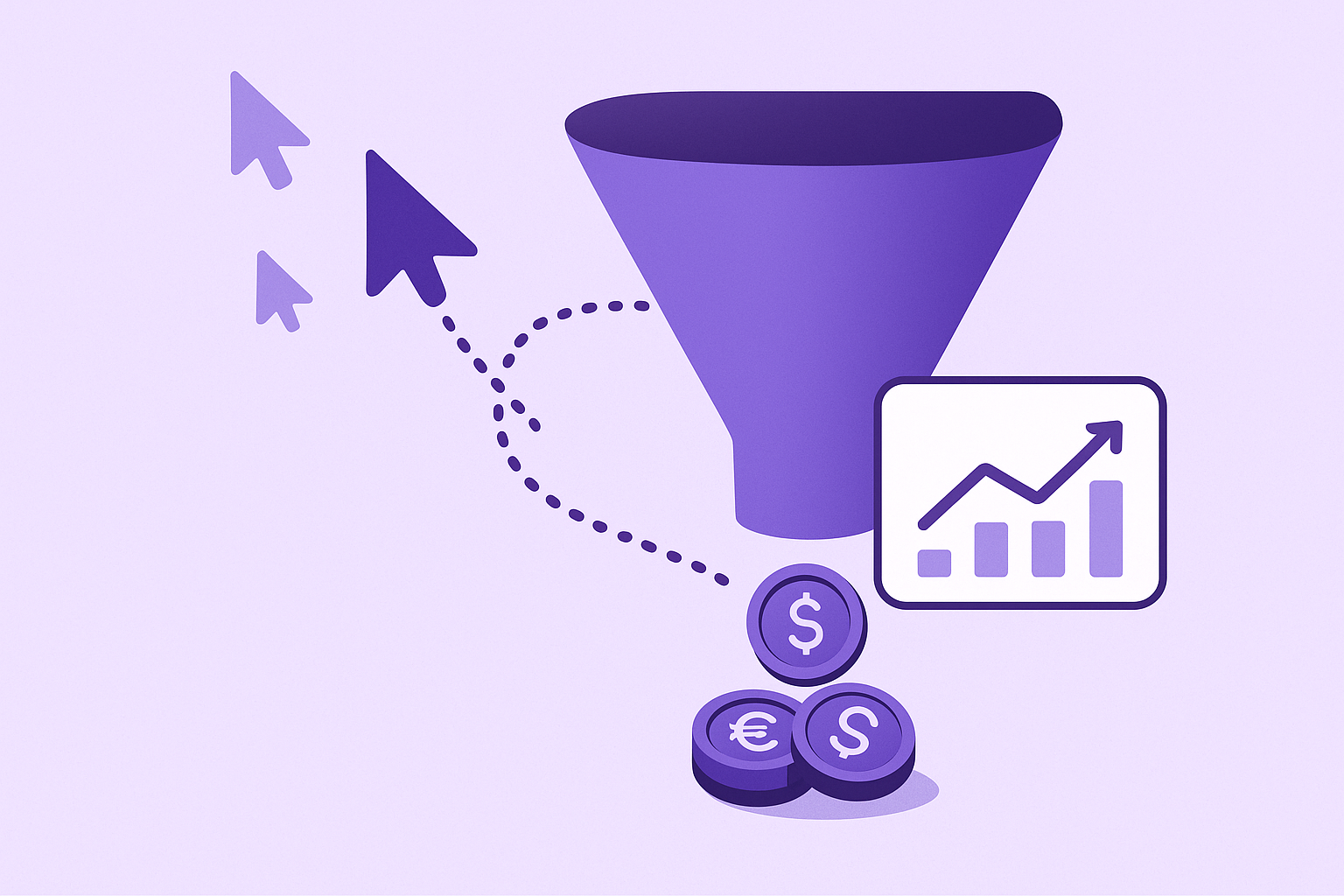
Conversion tracking for service businesses is the least glamorous investment you will make and the most profitable. Without it, you can spend thousands a month and still not know which half works.
Most service businesses are flying on instruments that lie: platform dashboards each claiming credit, phone calls vanishing from reports, and no thread connecting a sale back to the click that started it.
This is a plain-language guide. By the end you will have:
- The five layers of a trustworthy setup and what each one catches.
- An honest explanation of what attribution can and cannot tell you.
- The 10-question tracking self-audit to score your own setup today.
The symptoms of broken measurement
You do not need a technical audit to suspect a problem. The symptoms show up in meetings:
- Reports lead with clicks and impressions. Activity metrics standing in for money because the money cannot be traced.
- Phone leads are invisible. Half your enquiries call, and reporting counts only forms.
- Every platform claims the same sale. Google, Meta and the SEO report all take credit; added together they exceed reality.
- Nobody can answer “which channel produced our best clients?” Not best leads. Best clients.
If two of those sound familiar, the sections below are your repair manual.
What good looks like
A working setup does one simple thing end to end: every enquiry carries its source, and every sale is traced back to an enquiry.
That gives you one set of numbers marketing and sales both trust: cost per lead, per qualified lead, per appointment and per sale, by channel. It is the data spine behind the lead cost ladder and the 7-point diagnostic, and without it both are guesswork.
The stack in plain terms
Five layers, each catching what the previous one misses:
| Layer | What it does | Without it you lose |
|---|---|---|
| Conversion events | Records forms, calls, bookings as conversions with their source | Any connection between spend and enquiries |
| Call tracking | Assigns numbers per channel so phone enquiries carry a source | Phone leads, often half of all enquiries |
| CRM integration | Every lead lands in the CRM with source attached, outcomes recorded | The link between leads and what they became |
| Offline conversions | Feeds sale outcomes back to ad platforms | Platforms optimise for volume instead of buyers |
| Server-side tracking | Sends data reliably despite browser and privacy blocking | A growing slice of conversions, silently |
Two of these deserve a plain-English word more than the others.
Call tracking is non-negotiable for service businesses. It swaps your displayed number per visitor source, so the call from a Google ad and the call from Instagram are counted, recorded and attributed separately. Your number stays consistent where it matters (Google Business Profile) with configurations built for that.
Offline conversions are the quiet superpower. When you tell Google and Meta which leads became sales, their bidding stops chasing cheap enquiries and starts finding people who resemble your buyers. Same budget, better clients, and almost nobody sets it up.
Do this before you move on:
- Ring your own business from a number in an ad, then check whether that call appears anywhere in reporting.
- Ask whoever runs your ads one question: “Are sales outcomes being fed back into the platforms?” The answer tells you a lot.
Attribution honestly: what you can and cannot know
Attribution is deciding which touchpoint gets credit for a sale. The uncomfortable truth: no model tells the whole truth, because parts of the journey are invisible.
- Last-click credits the final step and ignores everything that created the demand.
- Data-driven models spread credit statistically, better but still blind to word of mouth and dark social.
- No model sees the friend’s recommendation, the Facebook group thread, or the review binge that actually decided it.
A sound working posture: use data-driven attribution for budget direction, ask every new client “where did you first hear about us?” and record it, then treat the combination as directional truth. Directional truth beats false precision, and it certainly beats three dashboards each claiming the same sale.
The 10-question tracking self-audit
Score one point per honest yes:
- Every form submission is recorded as a conversion with its traffic source.
- Phone calls from the website are tracked with source attribution.
- Calls from ads (call extensions, call-only) are tracked separately.
- Every lead lands in a CRM automatically, with its source attached.
- Lead outcomes (qualified, booked, sold, dead) are recorded in that CRM.
- Sales outcomes are fed back to Google and Meta as offline conversions.
- Booking-system appointments connect back to their marketing source.
- Server-side tracking (or equivalent) is in place for key events.
- You can state last month’s cost per sale by channel, today, from one report.
- Marketing and sales look at the same numbers in the same place.
8 to 10: rare air; optimise, do not rebuild. 5 to 7: solid bones; the usual gaps are offline conversions and call tracking, and closing them changes bidding quality overnight. 0 to 4: stop judging your marketing until this is fixed; you genuinely do not know what is working, and neither does anyone reporting to you.
What to fix first
The order that pays fastest for a typical service business:
- Conversion events done properly. Forms, calls, bookings, each with source. Days of work, not weeks.
- Call tracking. The biggest single blind spot for phone-heavy businesses.
- CRM integration with outcome stages. This is where lead quality becomes visible.
- Offline conversion feedback. The compounding one; platforms improve from here on.
- Server-side tracking. Worthwhile hardening once the rest exists.
Steps 1 and 2 are largely in-house-able with patience. Steps 3 to 5 are where most owners bring in specialist setup, because a half-wired CRM quietly produces confident, wrong numbers, which is worse than none.
FAQ
How much does proper tracking cost to set up?
Call tracking runs roughly $50 to $200 a month depending on volume, and a full setup (events, calls, CRM wiring, offline conversions) is typically a few thousand dollars of one-off work. Against a five-figure annual ad budget being spent half-blind, it is usually the highest-ROI line item of the year.
Will tracking changes affect my ad performance?
Yes, positively, and mostly through offline conversions: once platforms learn which leads become buyers, their bidding optimises for your actual outcome. Expect some reporting movement during the switch as double counting disappears; the new, lower numbers are the true ones.
What about privacy rules and consent?
Nothing here requires anything shady: it is measurement of your own enquiries with a compliant privacy policy, consent where required, and reputable tools. Australian privacy law is tightening, so have your policy reflect what you collect, and treat that as table stakes rather than legal advice.